
This is a story told through one street in Fuheis, Jordan. It is a street that forces you to push through foliage…
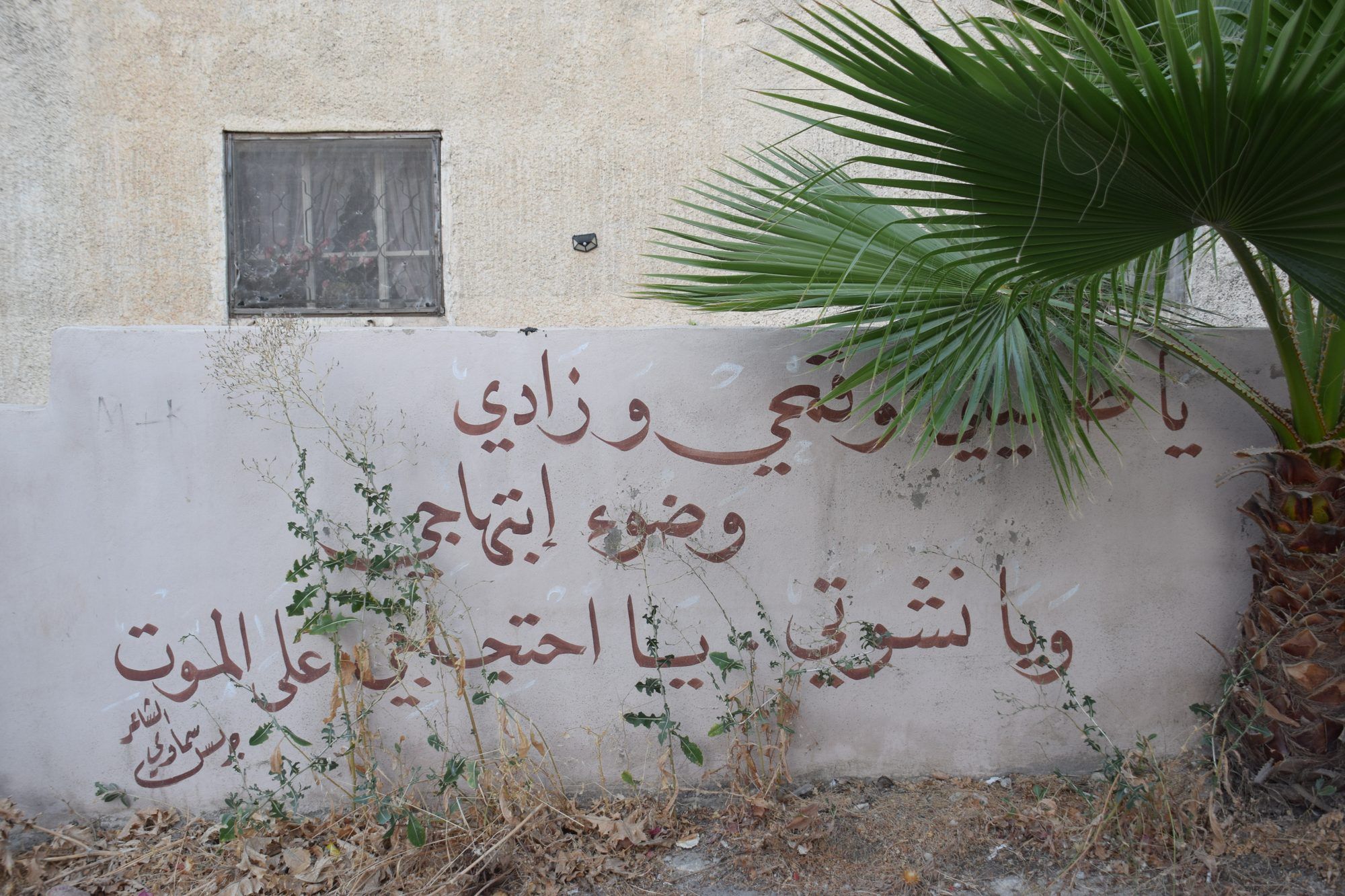
look behind unfortunately positioned cars…
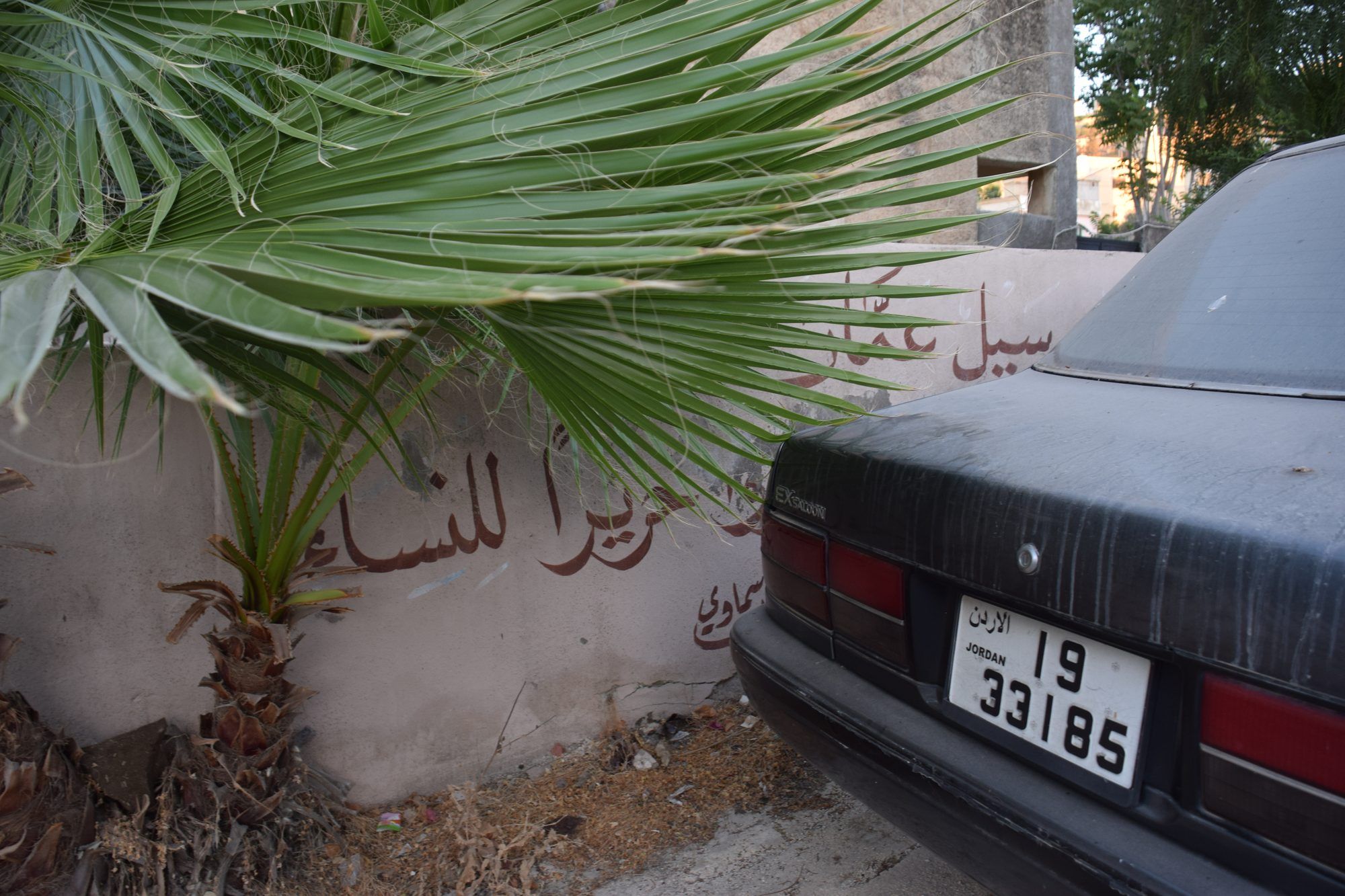
and imagine what was there on walls that have eroded by time.
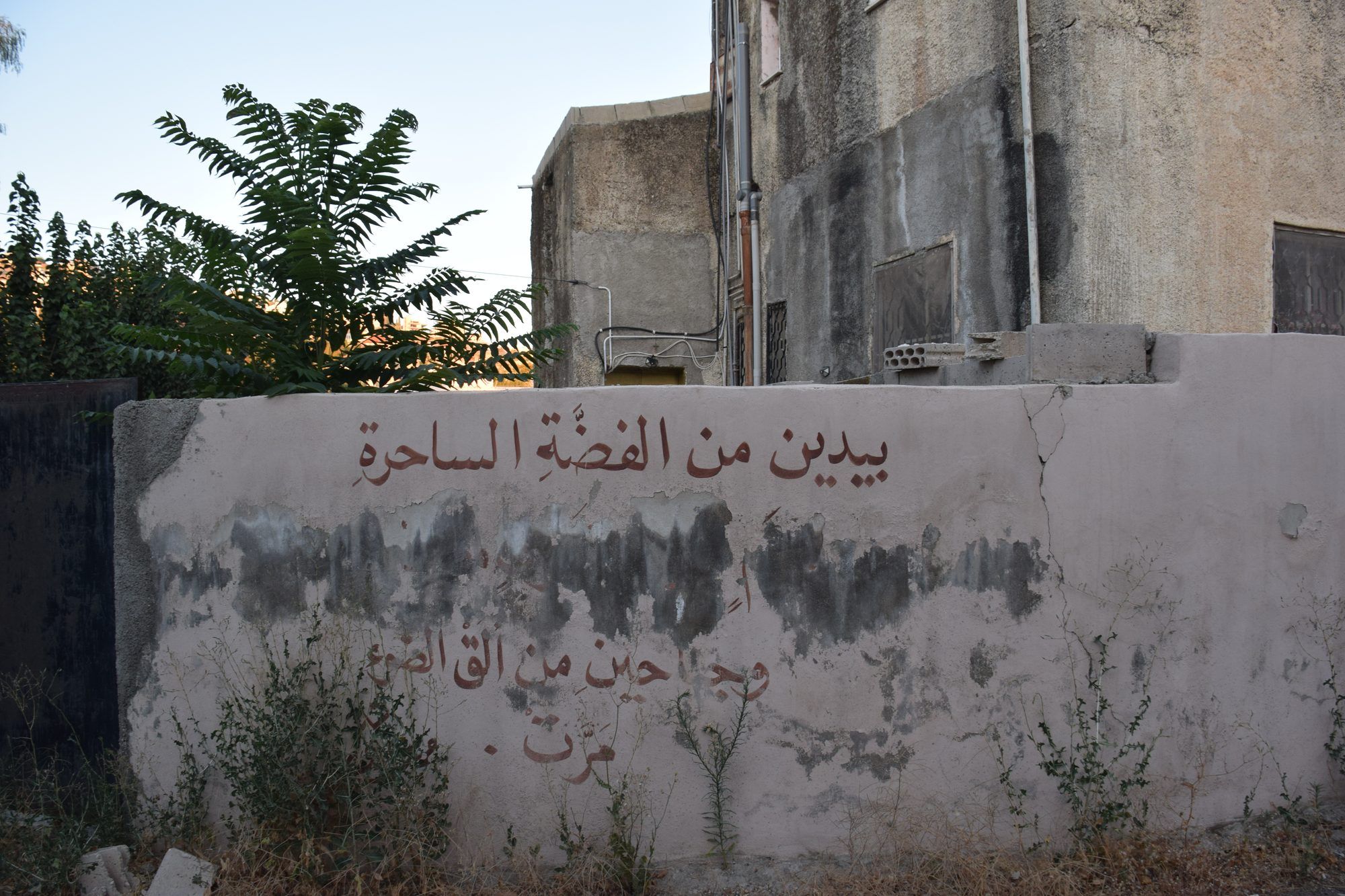
You do this in the pursuit of more literature; poetry that you can seemingly only find on this street. It is a street where animals…
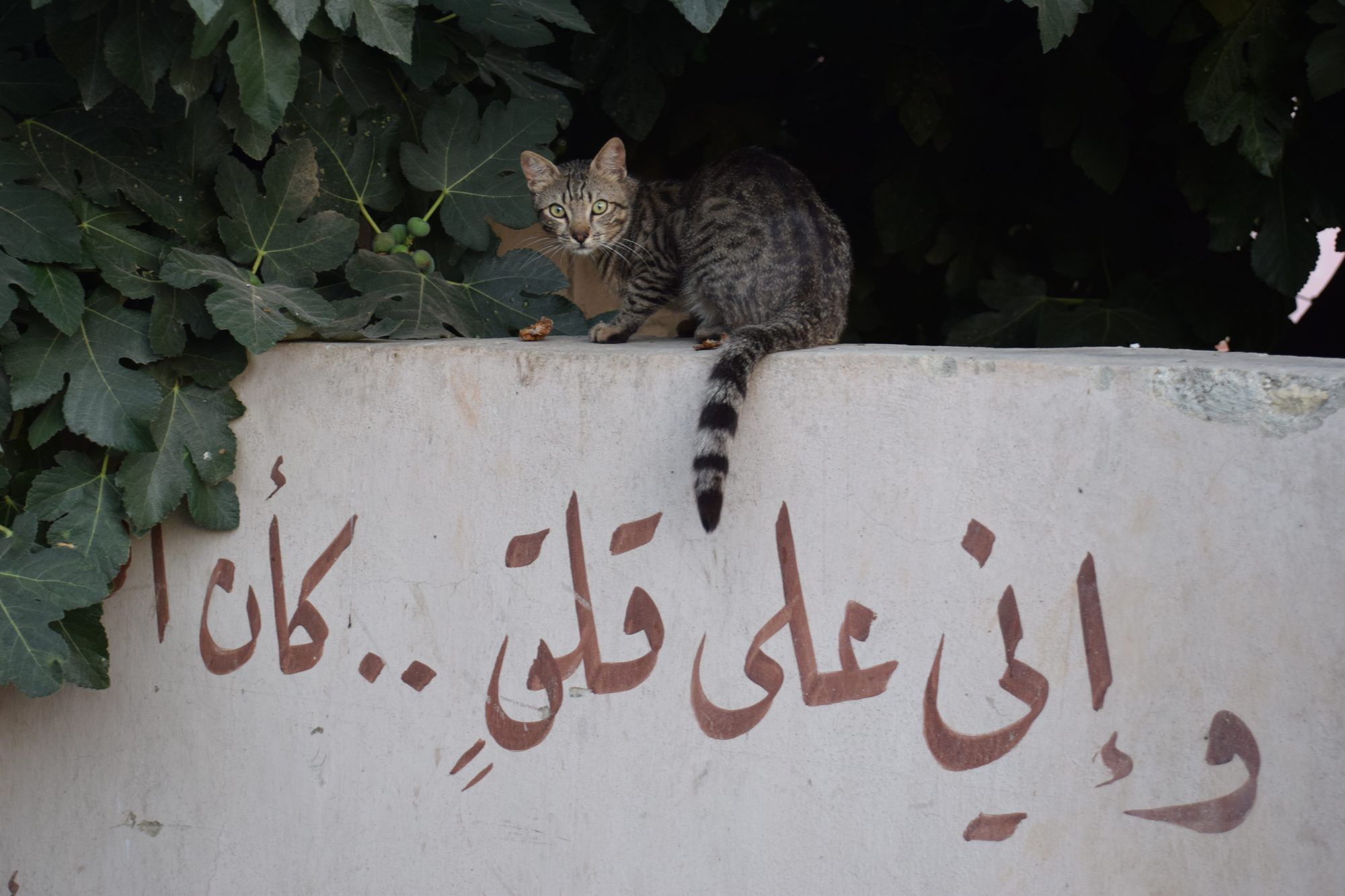
And people alike, leave their marks
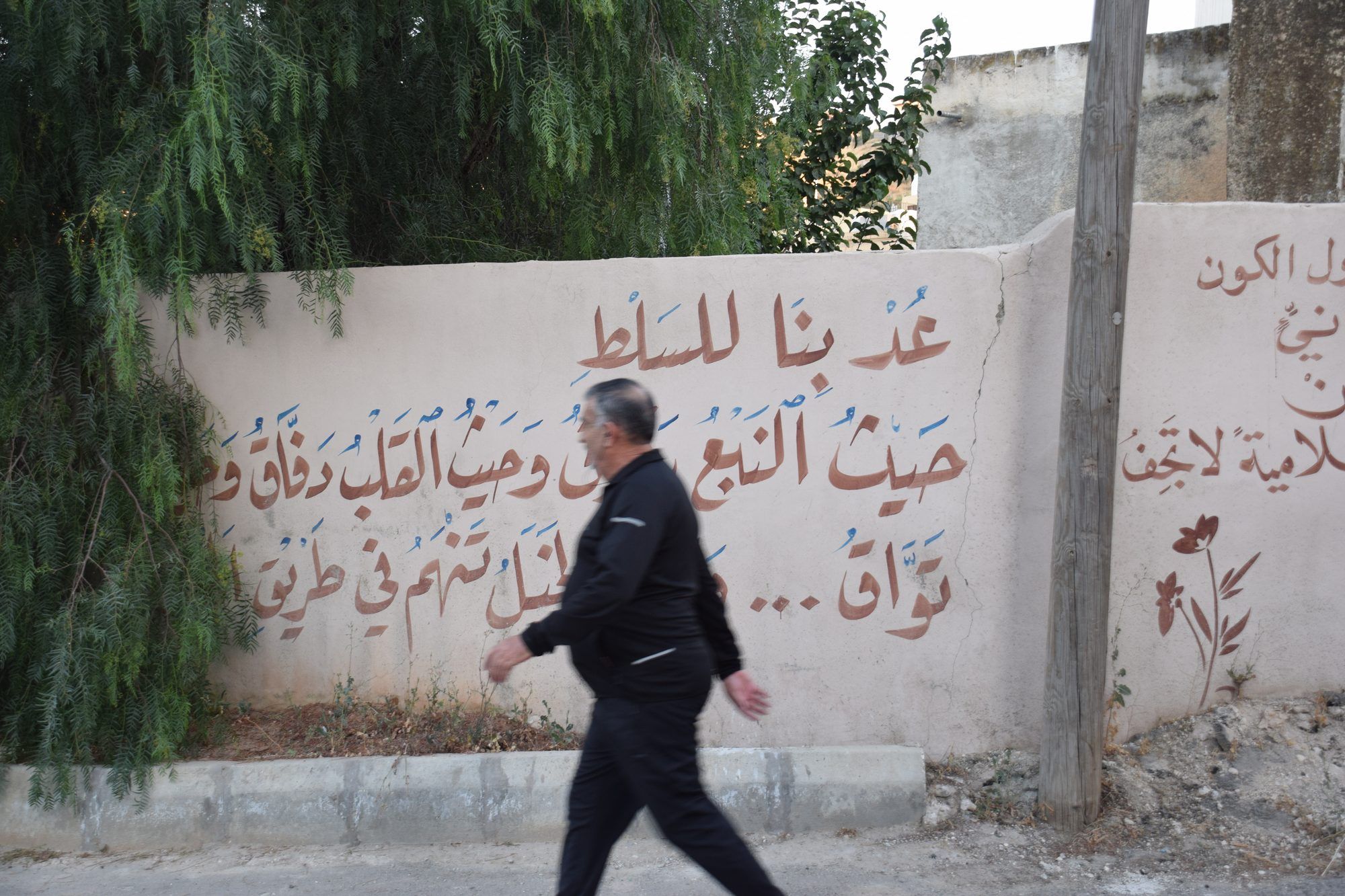
There are a few well preserved ones…
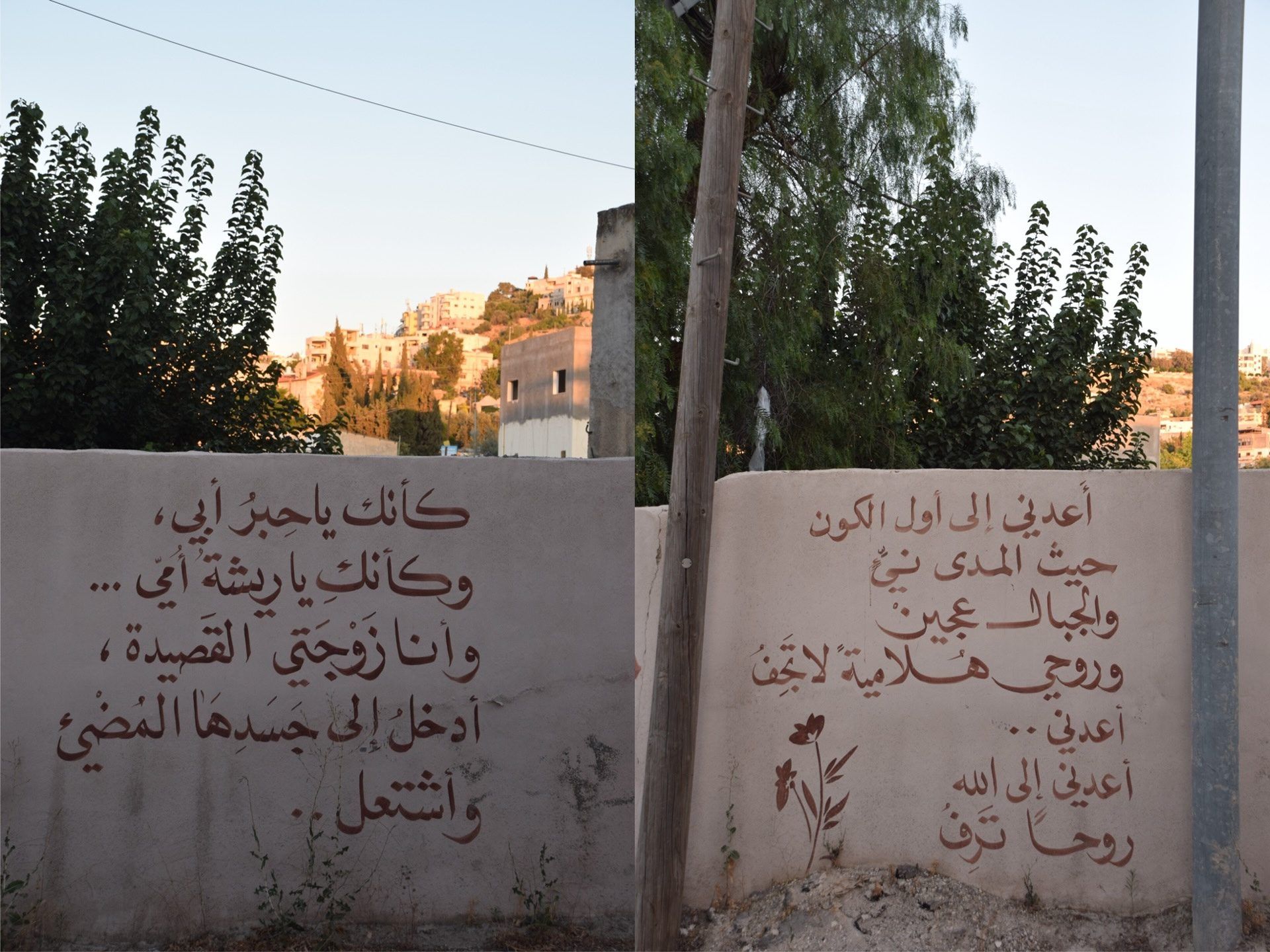
And so do what you can when you are powerless: you copy and emulate to the best of your ability…
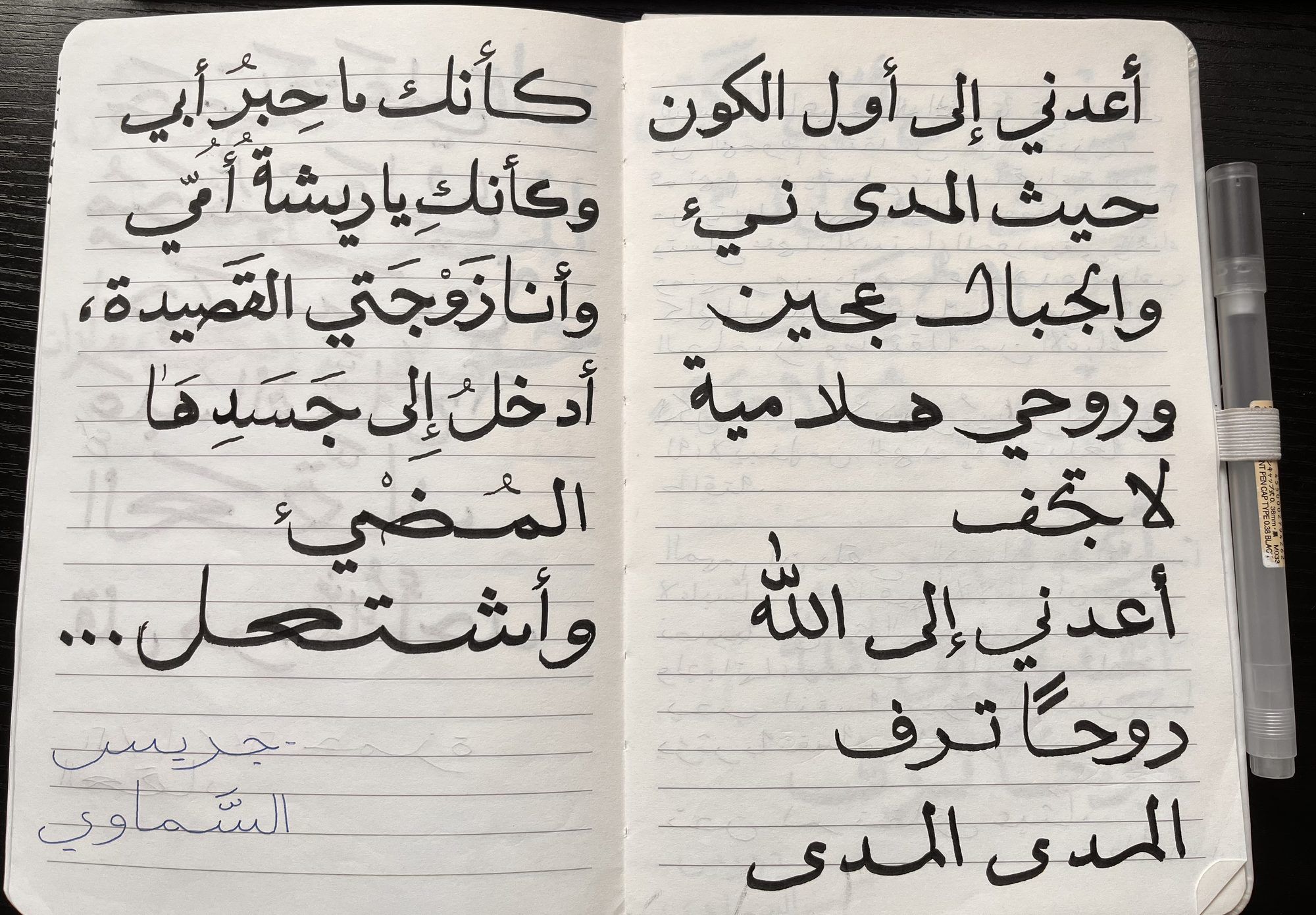
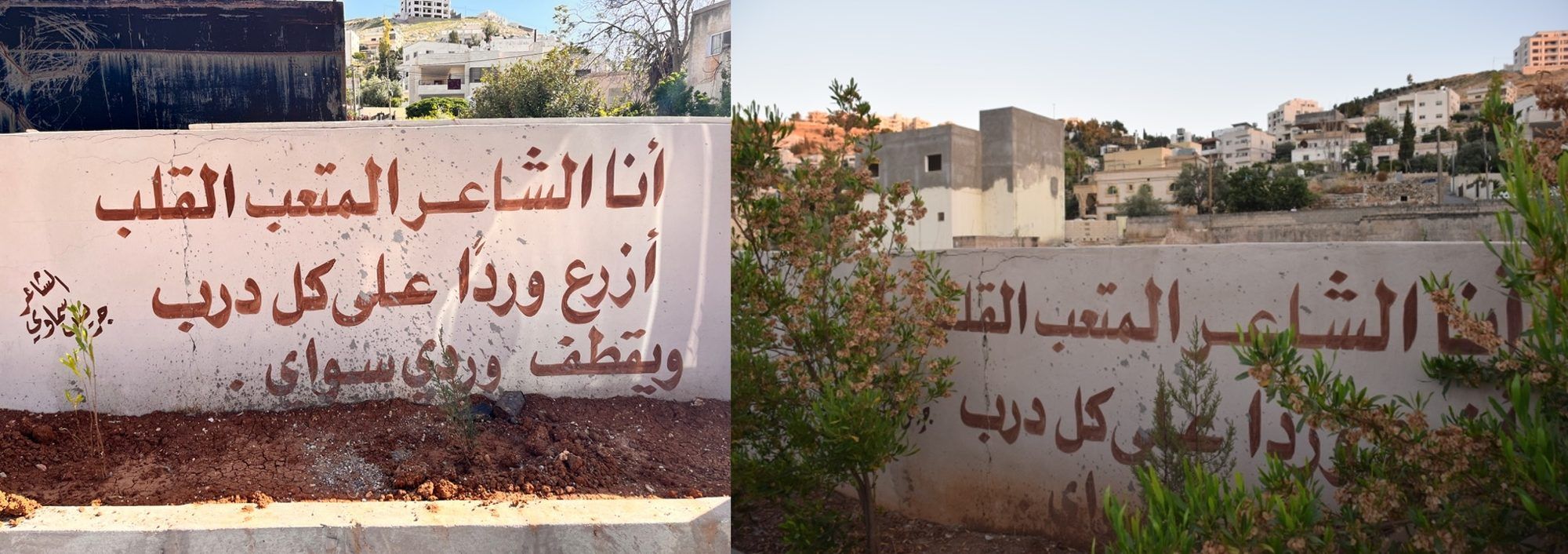
You record it, because this poetry is alive and changing, and you do not know what will change the next year…
Eventually someone notices you and your pursuit, and notices his car is in the way of your record keeping. He apologises with a friendly smile and moves his car, and you latch on with the hope that he will have more information for you.
You already know this street was named after a Jordanian poet from Fuheis, Jeries Al Samawi, it says so on the sign…
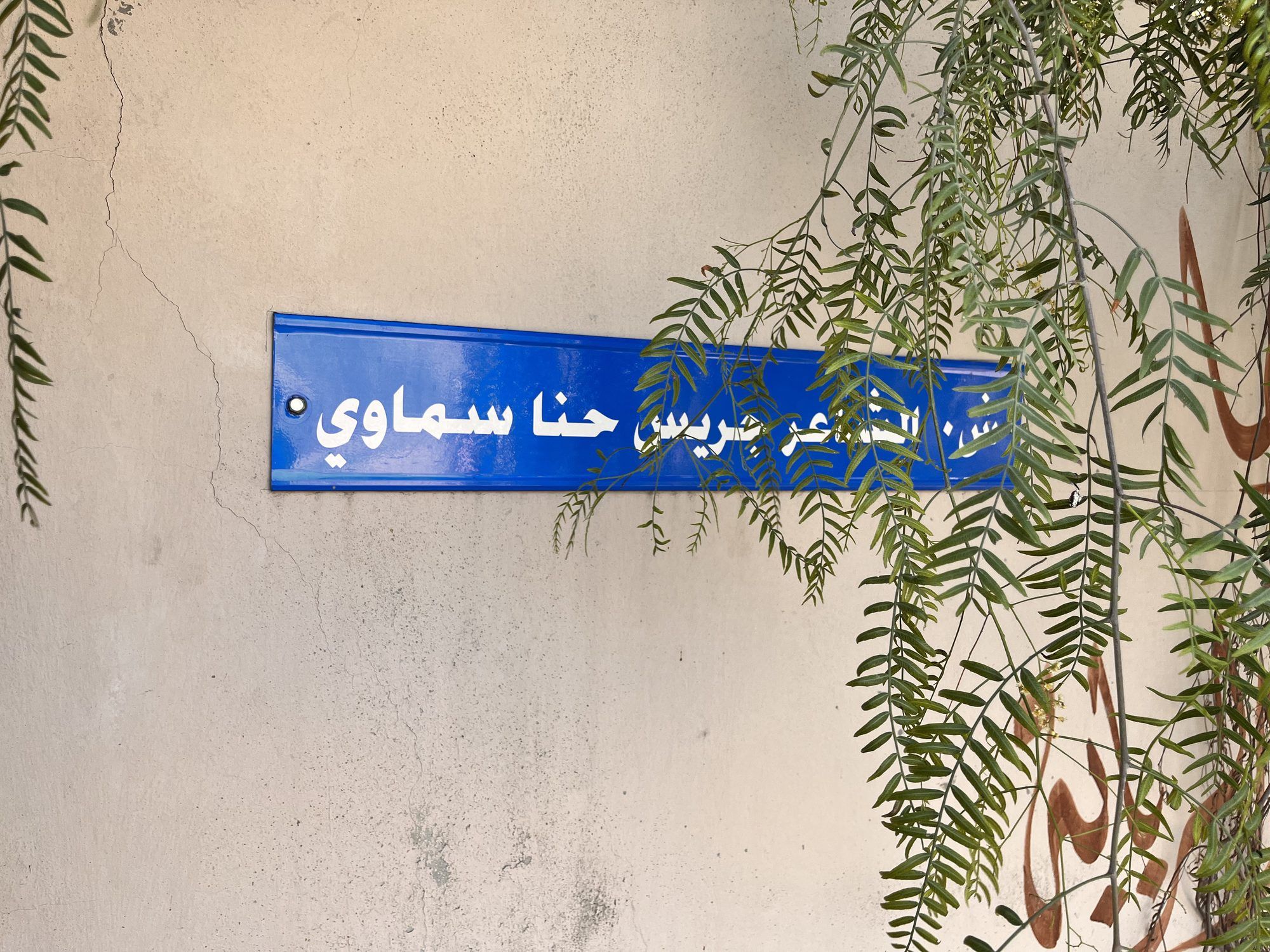
But you know nothing more, was this done in his honour or by his request as the minister of culture? When was it done?
You sit down with Habes, whose name is rare and means "imprisoner", and discuss many things, things you are now beating yourself up for not writing down anywhere. You have vague memories of talking about marriage and how Habes tells you he will never be able to understand women, even in his older age. He tells you “a woman is like a bee, she stings you and then you don’t know where she flies off to”. He says this, but when he spoke about his late wife, it was clear to you how much he respected her.
He used to teach at the Christian orthodox school; religion and Arabic. You discuss the writing on the wall, which he does not have much information about. He talks to you about the murals…
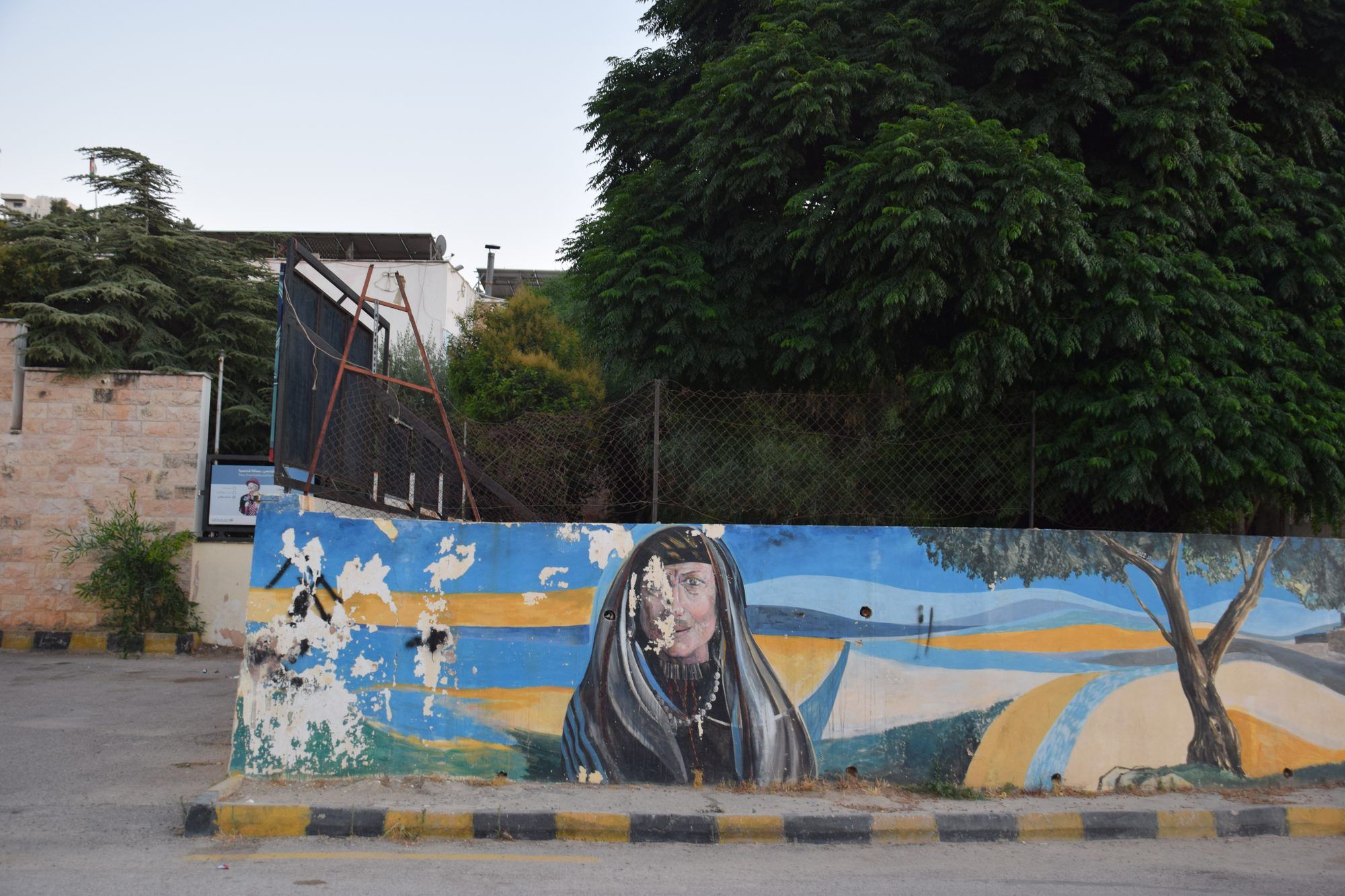
And how they’re also neglected. How art and writing are neglected in general. So, you feel comfortable enough to tell him you are thinking of writing a piece about this street and this poetry, but he tells you “why… who’s going to read it?” The conversation ends nicely, with you happy having spoken to someone new. Having spoken to someone old. You often feel that, in your world, you only speak to people your age.
You realise your phone has been missing calls; you are late for dinner. You cannot help but get distracted by the incredible colours of the sunset ahead of you…
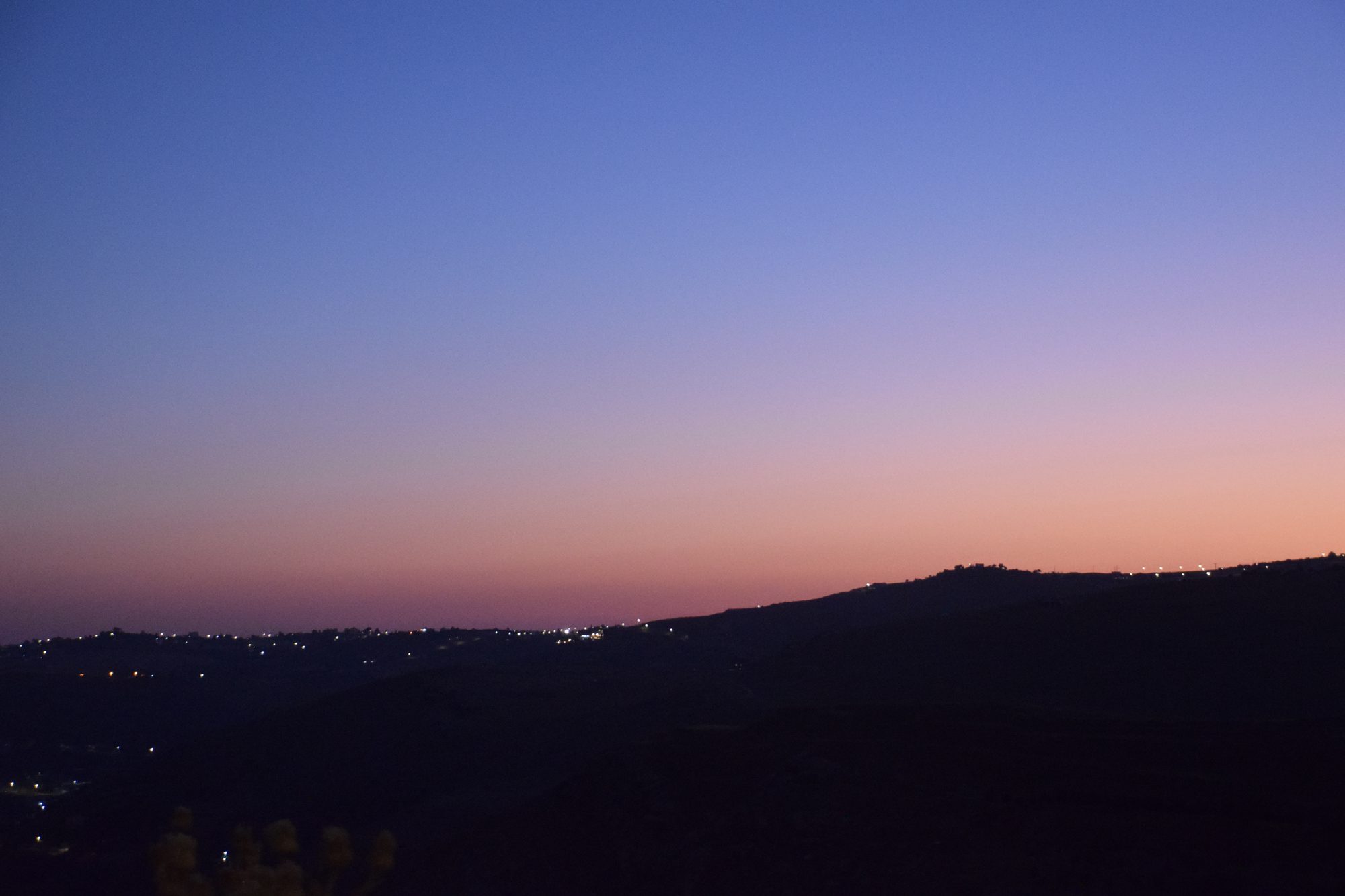
And so you pursue a better look, and for that decision you are rewarded with excited dogs…
The woman with the dogs tells you she’s been adopted by them. And so you go home, your soul filled; content with the affirmation that spontaneity arises from the dullest of things. Human moments are everywhere, and they all must be cherished; but in order to be able to do so, you must… let the soul dance
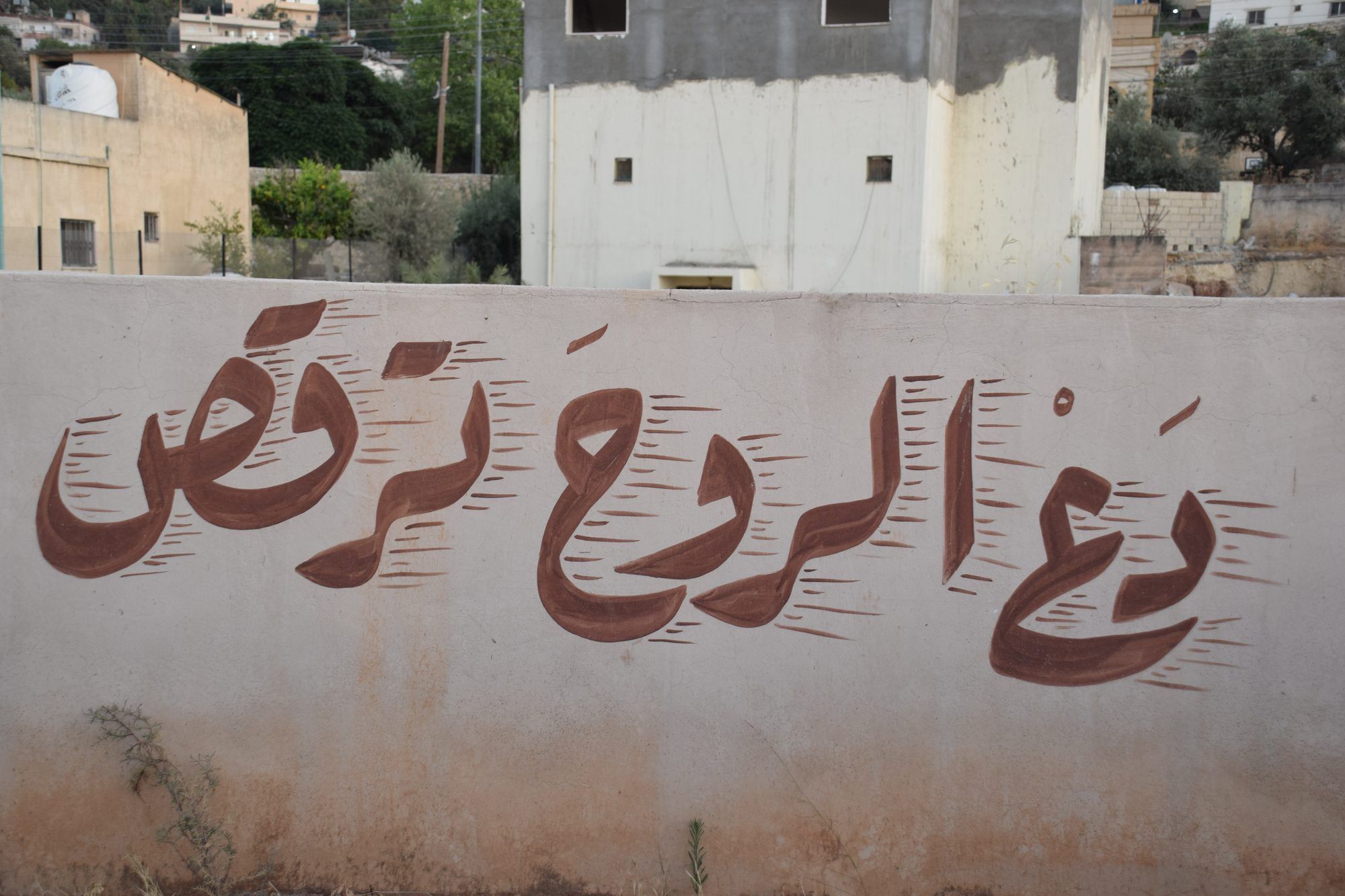
Eventually you may accept that the overgrown trees, the chipped off paint, the dirt and mud, the stray cats and dogs, the kids playing football, the old men sitting by the supermarket on plastic chairs, the tune of the gas car (or the biscuit car) have all become part of the poetry, whether that was intended or not.
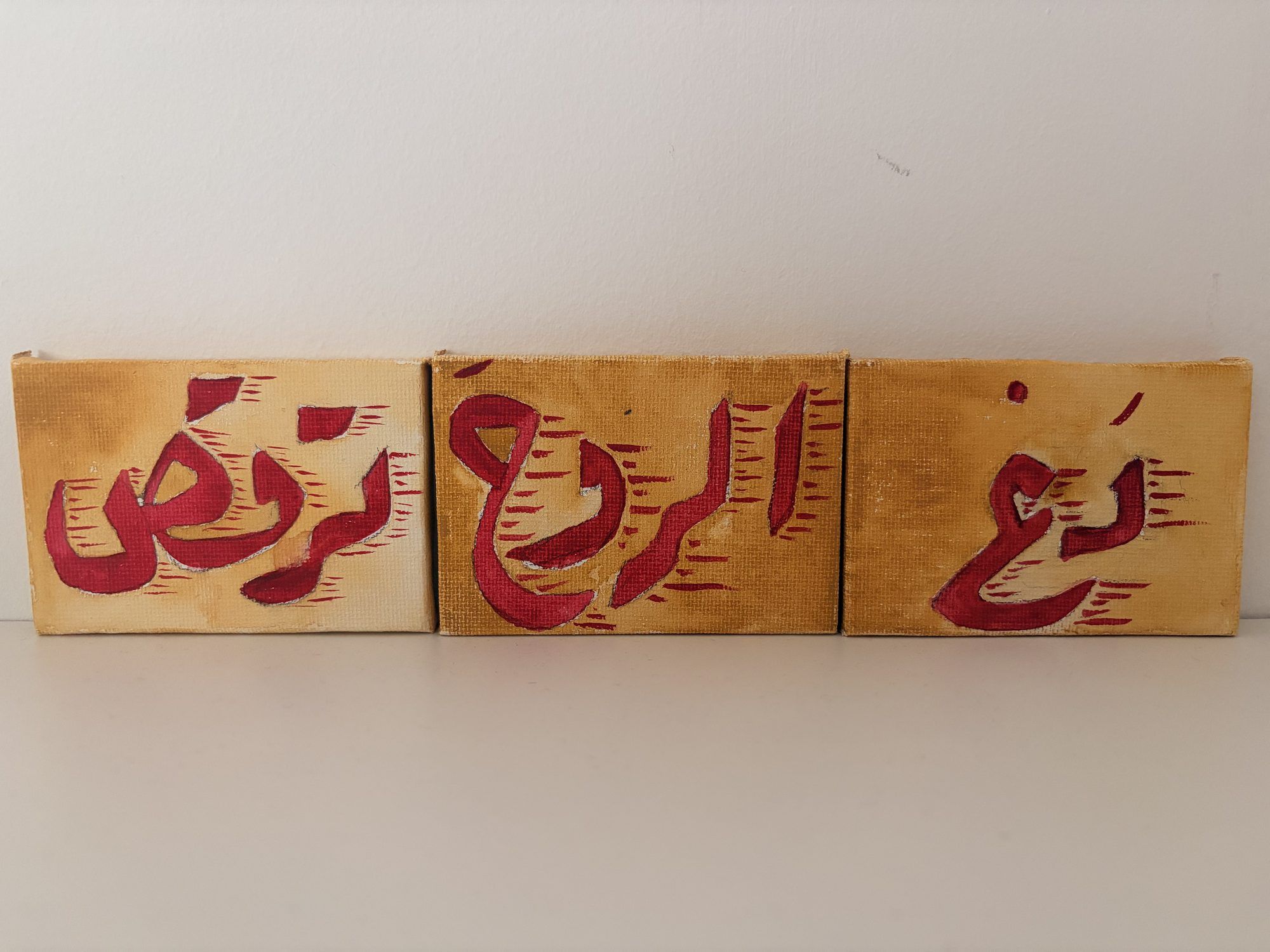 Painting by Sophie Unal (who has remarkably done this without knowing Arabic)

Click the picture to return home.