
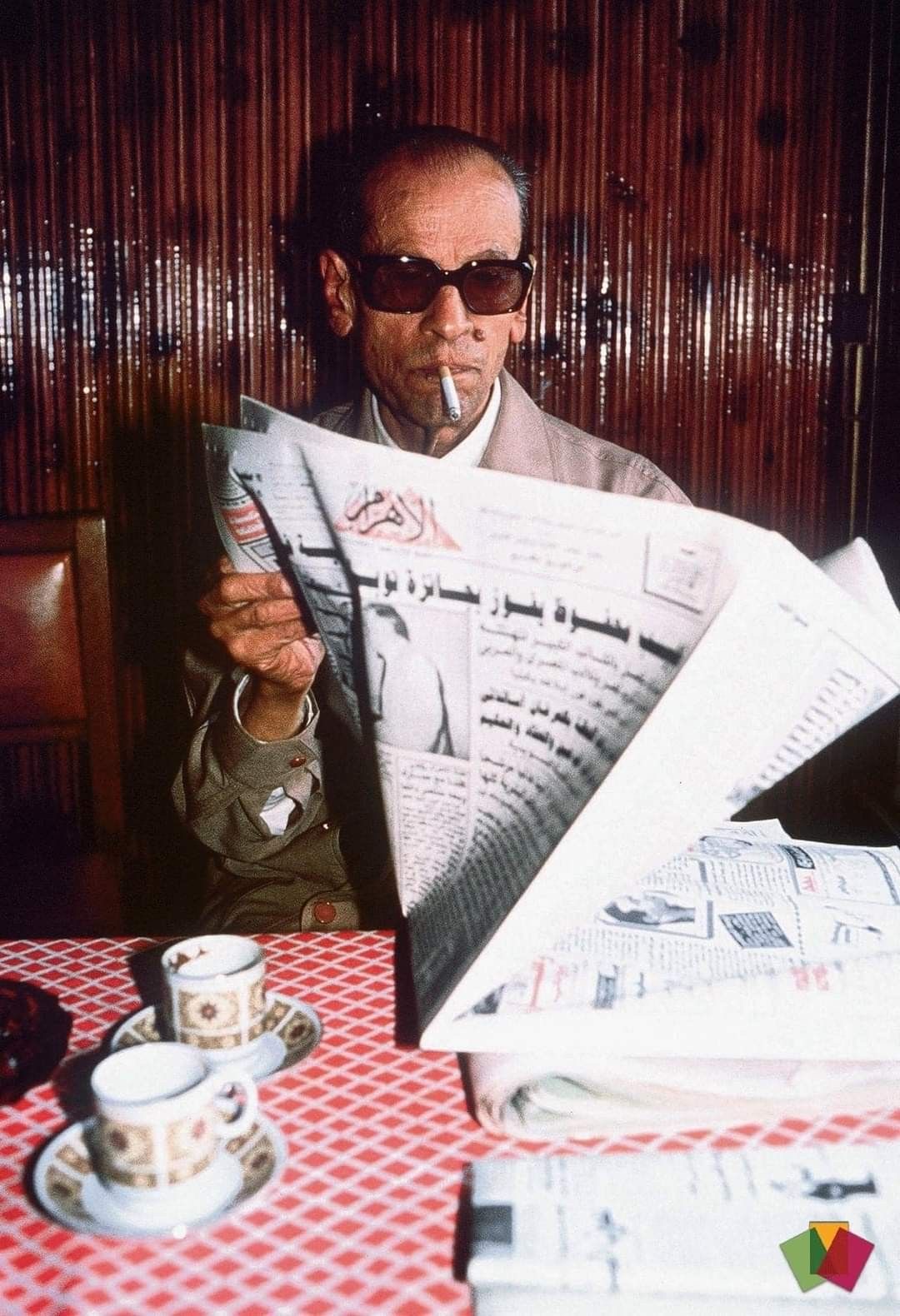
"It's something I'm known for, and people often criticize me for it. Many tell me, 'That's not what art is. An artist can't be organised. An artist is supposed to be chaotic and spontaneous.'"
These are the words of the 1988 Nobel Prize in Literature winner. It is difficult to think how one may pursue creative work while balancing a regular old 'boring' job, but in this interview, Naguib Mahfouz gives us pragmatic insight on how he did it."The truth is, organisation was forced on me because of my mutliple hobbies. Even when I was a student... why? Because I had to be the kind of student who succeeded. My circumstances simply didn't allow me to fail.
At the same time, I was a football player, so I had to train. I loved cinema, so I had to go to the movies every Thursday. I loved listening to Umm Kulthum, so I had to make time to listen to Umm Kulthum."
"How do you fit all of that into one life?"
What a way to frame the issue. We must be defined by one thing. You are an engineer and you could not possibly be anything else. Yet people are amazingly versatile. There is a photographer called Peter Mitchell who began taking pictures in 1970 when he was a truck driver. In that respect, our view of class discounts what a person may be. And they may internalise it too.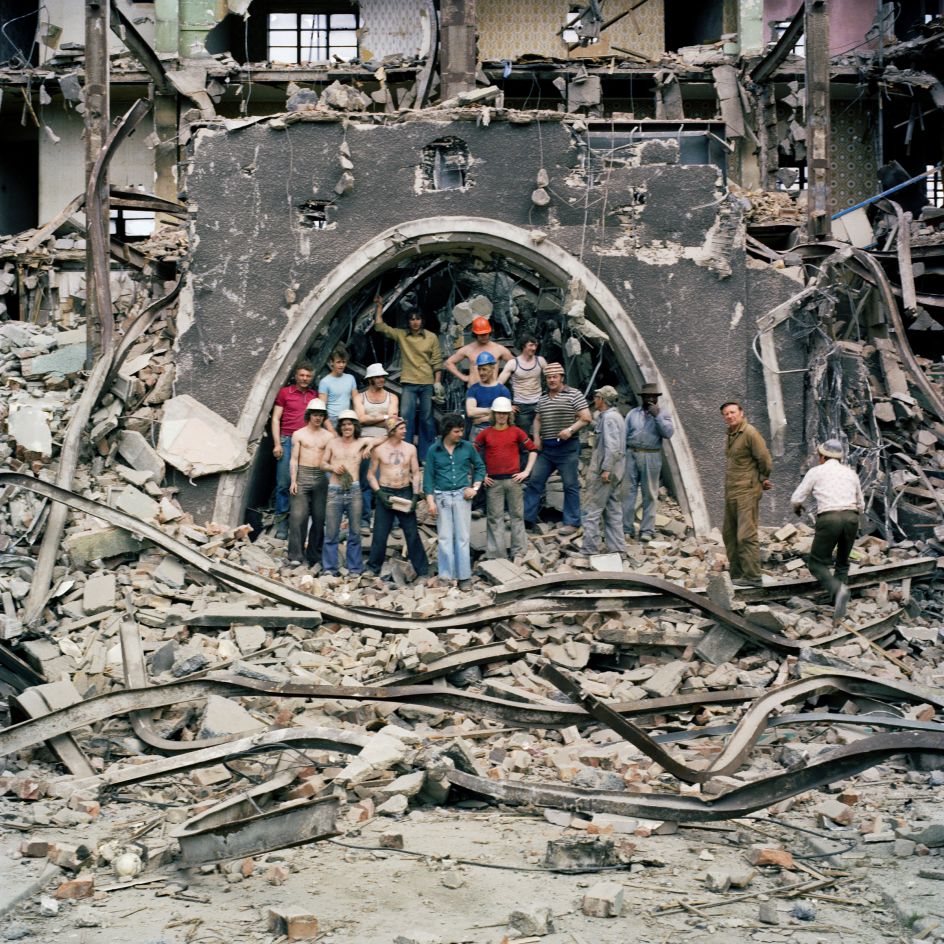 (A photo by Peter Mitchel showing construction workers in Quarry Hill)
Especially in the Arab world I believe you are completely discounted based on what you do. Based on your family and their social stature. Based on your accent. But those that are great, are great because they freed their minds from external definition. They saw themselves for who they were. Taha Hussein, who's autobiography "The Days" is one of the best books I have ever read, refused what people wanted him to be.
A blind boy from a poor and rural family, who's only destinity really was to memorise the Quran only... refused. He saw who he was. He became the first Egyptian to recieve a PhD. Not the first blind Egyptian. The first Egyptian. Ever.
It's one thing to just dream to be someone else, and another to do it. That is the practical heart of Mahfouz's question "How do you fit all of that into one life?"
"Through organization.
Later, when I got a job, the only time I had was after work. Either I organized those hours and used them to write, or they would simply disappear. Especially since my love for literature and reading has never left me—not even to this day as I'm speaking to you. So I had no choice but to become organized.
Organization wasn't a preference; it was something life imposed on me for the sake of my literary life.
The truth is what they said about me is right. I mean at times I would wake up at 3 am to find my soul [I can't tell what he says here]. But I know I'm going to wake up in the morning to go to the Ministry of Religious Endowments to clock in on time.So I'd let go of that rush of inspiration and go back to sleep"
"Writing had its time: between four and seven."
As he laughs, he says "After a while, you get used to it. The inspiration itself starts arriving at that time. That's the point many people miss. It's like training yourself to eat lunch at two o'clock. By quarter to two, you'll find yourself starving. The mistake is to think that I write even when I don't feel like writing. That's never been the case. Rather, the desire to write entered the routine, so it started showing up at its appointed time."
"Organization is no different to spontaneity. Why? Because organization is constantly nourished by spontaneous moments that happen throughout the day."
"You're sitting in a café, and something happens.You're eating, and something happens.
You're about to go to sleep, and something happens.
Aren't all of those spontaneous moments? But you still want the organisation."
I really romanticise this golden era of Egyptian creativity. That is all for today.

Click the picture to return home.