
Hamza Al-Aqqad 24/06/2026 London
Shawerma, Doner, Gyros, Tacos Al Pastor. Rotating meat on a spit served in bread. You could not imagine how much this topic would rile me up. Who came up with it first? Well, it must’ve been us, the Arabs, and even if we didn’t invent it we must’ve mastered it… I would hate seeing videos of Turkish chefs online with their begrudgingly delicious looking Kofte recipes. It’s Kofta, not Kofte, I would think to myself, not knowing that the word for both comes from Persian. Food, as it turns out, is deeply intertwined with our feelings of nationalism.
“[The Nationalist] will generally claim superiority for [his country] not only in military power and political virtue, but in art, literature, sport, structure of the language, the physical beauty of the inhabitants, and perhaps even in climate, scenery and cooking. He will show great sensitiveness about such things as the correct display of flags, relative size of headlines and the order in which different countries are named.” – George Orwell, Notes on Nationalism
Objectively it is quite a silly task to try and apply the rigid borders of our modern nation states to something as universal as cooking meat over fire. There is no concept that is inherent to one type of people. Putting aside that nationalist idea of ‘They stole our idea!’, we can actually learn of interesting stories. Lebanese immigrants came to Mexico, made a pork shawarma with a pineapple on top and it became a Mexican staple (oversimplified as hell). But I would genuinely enjoy food I loved less, if I started actually considering, what if the Turks did really invent this? Why do we think it takes away from the food if it wasn’t invented by my ancestors? What does that even mean? It is much more freeing to simply enjoy good food and appreciate that people all across the world come up with similar dishes.
I'd be hyper focused on the small differences, here are some examples:
1)Oh you don’t get it, our Palestinian Falafel is made with chickpeas, the Egyptians make it with fava beans, it’s literally a completely different dish, you ignorant…
2)No, no, our stuffed vine leaves are not cooked in tomato, unlike the Iraqis’. We cook it with lemon juice. They don’t know what the fuck they’re doing.
3)See our Shawerma is better because Doner has lettuce and tomatoes, whereas we keep it simple with pickles only, so clearly ours is better right? We also toast ours.
4)You see you don’t get it, Lahmachun is a fake dish because the origin of the word comes from Arabic Lahm Bi Ajeen, which means meat in dough, so this dish is simply stolen from us (but when I learned shawerma comes from the Turkish word Çevirme my brain blocked that out).
More lately I have been noticing this rage among Arabs when you discuss food, and it’s deeply political. If you call a Lebanese dish Syrian you are the devil and want Syria to reoccupy Lebanon. If you say Mansaf is enjoyed by Palestinians and not just Jordanian, then you are a disgusting anti-monarch reformist. It doesn’t make sense, the food consumed by people for thousands of years was indifferent to the names given to the area in the last 100 years. Yet nationalism prevails over logic, always.
Those spears of nationalism that make up the matrix that surrounds our brains as we try navigate its complexities are extremely powerful. They inhibit other more logical thoughts. These poisonous spearheads infect much of what they penetrate. Food is a relatively harmless one, but it quickly mutates into a hatred of the other. A hatred due to a perceived superiority. My food is better, I am better, why are these people around me with their disgusting food? They’re disgusting. They are lesser people, after all look how they fail to cook with the same ingredients I have.
And yet there is a limit to how far you can stretch this idea that food is indifferent to who made it. Soul food in America is directly tied to the slave trade. Chicken was the only animal slaves were allowed to raise, and they combined that with the techniques of their now endlessly far away previous homes in west Africa to make fried chicken. Removing the cultural tie has a clear consequence here on erasing a shameful and important part of history.
What about Israeli food? By my logic I should not have any issues with that, right? Sure call hummus Israeli, mate. This is again a situation where ignoring the origin of certain foods only helps promote a harmful narrative that continues to be used to justify genocide, apartheid and ethnic cleansing.
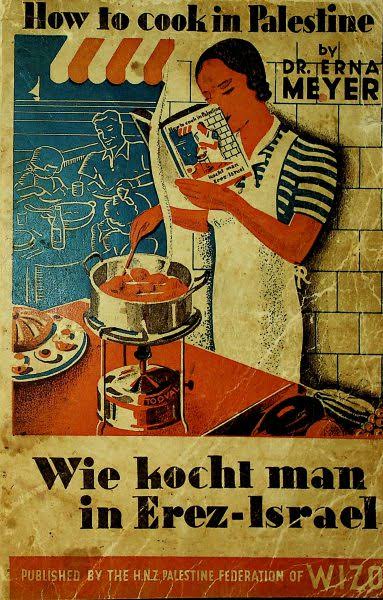
There is no better example of this than the 1936 book, How to Cook in Palestine, written for Jewish immigrants in Palestine. In this book you will find gems of quotes such as:
1. “What shall I cook? This problem, the concern of housewives the world over, is particularly acute in our country. The differences in climate and the necessary adjustments arising out of these differences compel the European housewife to make many drastic changes, particularly in her cooking - a change not so easy to achieve as is would seem. This is evident from the fact that in most families the adjustment is slow, unwilling and generally incomplete, for the majority of the people cling tenaciously to the eating and cooking habits acquired by many generations in their respective countries.”
2. “the native population can eat very strongly spiced foods. If it is not advisable for the European to simply imitate that habit, then he should resort to a richer seasoned diet.”
The funniest example to me is Israeli couscous. Touted as a novel invention during the Israeli austerity period, where an Israeli company took on the challenge of rice shortage to feed the people! What they came up with was… Maftool. Basically. A food that had existed for quite a while in the region.
The point is there is definitely a time and reason to hold on to the origins of food. But when an Italian sees red over American pizza claiming this is an abomination to their history and tradition, I will tell them to look up when the tomatoes arrived to Europe and when pizza was actually invented. Recipes are not sacred. Don’t tell me my dough, cheese and tomato thing isn’t pizza because it wasn’t cooked in a 500 degree wood fired oven without tomatoes shipped from San Marzano and cheese not made from buffalo.

Click the picture to return home.